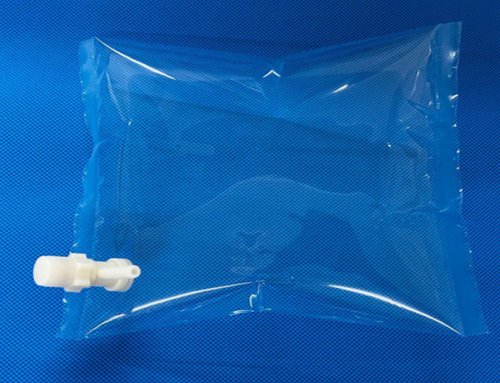


In a volatile organic compounds (VOCs) emission monitoring project at a large-scale industrial paint factory, we were tasked with providing accurate data support for the factory’s waste gas treatment and emission reduction planning. The core scenario of this monitoring had clear complexity: the paint factory mainly produced solvent-based paints, and during the production process, it continuously emitted waste gas containing VOCs such as benzene and toluene. After preliminary treatment, the humidity of the emitted gas remained as high as 95%, and the concentration of the target monitoring substances (benzene and toluene) was at the ppb level (one part per billion), which is a typical complex monitoring condition of low concentration and high humidity, putting extremely high requirements on the performance of sampling containers.
In the early stage of the project, we first adopted Tedlar bags, which are widely used in environmental sampling, for on-site sampling. In strict accordance with the industry standard operating procedures, we collected 3 sets of parallel samples at 3 different monitoring points of the paint factory’s waste gas emission outlet, with each sample volume of 1000ml. After collection, the samples were immediately sealed, labeled properly, and sent to the laboratory for testing. However, obvious abnormal problems occurred during the testing process: the monitoring results were extremely unstable. For the 3 sets of parallel samples at the same monitoring point, the deviation of the test values exceeded 50%. Benzene was completely undetectable in some samples, and the fluctuation range of the toluene concentration test values in some samples reached 20-80 ppb, which was far beyond the allowable error range of the industry. It was impossible to provide reliable and effective data support for the subsequent emission reduction planning, nor could we accurately judge the actual VOCs emission situation of the factory.
To solve the problem of unstable results caused by Tedlar bag sampling, we conducted technical research and judgment based on the high-humidity and low-concentration monitoring conditions, and then switched to FEP film gas sampling bags equipped with polytetrafluoroethylene (PTFE) valves and pre-filtration modules for sampling. The sampling process remained consistent with the initial stage, and 3 sets of parallel samples were also collected at 3 monitoring points to ensure the consistency of experimental conditions. After the improvement, the monitoring results immediately stabilized: on the one hand, FEP film has extremely low surface adsorption, and its smooth, non-reactive inner wall will not adsorb target VOCs such as benzene and toluene at the ppb level, ensuring that every trace of the target substance can be completely captured, and avoiding the situation of low detection value or undetectable due to adsorption; on the other hand, the extremely low gas permeability of FEP film effectively isolates the infiltration of external air and the leakage of samples inside the bag. Even if the samples were transported at room temperature for 48 hours, when sent to the laboratory for testing, the concentrations of benzene and toluene remained consistent with those at the time of sampling, without any concentration distortion or numerical fluctuation. The detection deviation of parallel samples was controlled within 5%, which fully met the industry monitoring standards.
Finally, the monitoring data collected by FEP film gas sampling bags, after multiple rounds of review and verification, were fully up to standard in terms of accuracy and reliability. They clearly showed the variation law of VOCs (benzene, toluene) emission concentrations at different monitoring points and different time periods of the paint factory, and accurately reflected the operation effect of the factory’s waste gas treatment facilities. These accurate and reliable data successfully became the core data support for the paint factory to optimize the waste gas treatment process and formulate scientific and reasonable emission reduction plans, providing an important technical basis for the factory to achieve up-to-standard VOCs emissions and reduce environmental impact.