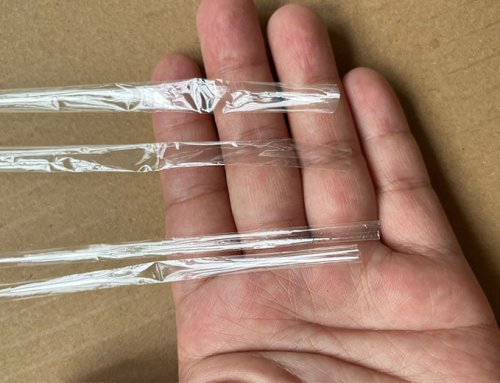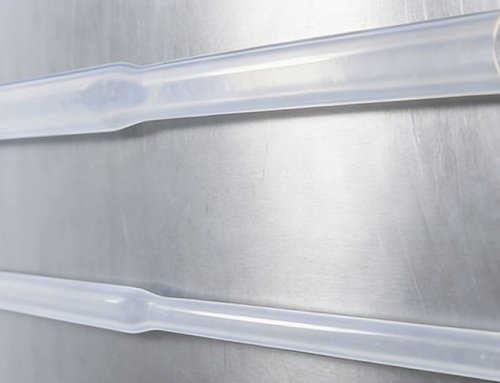
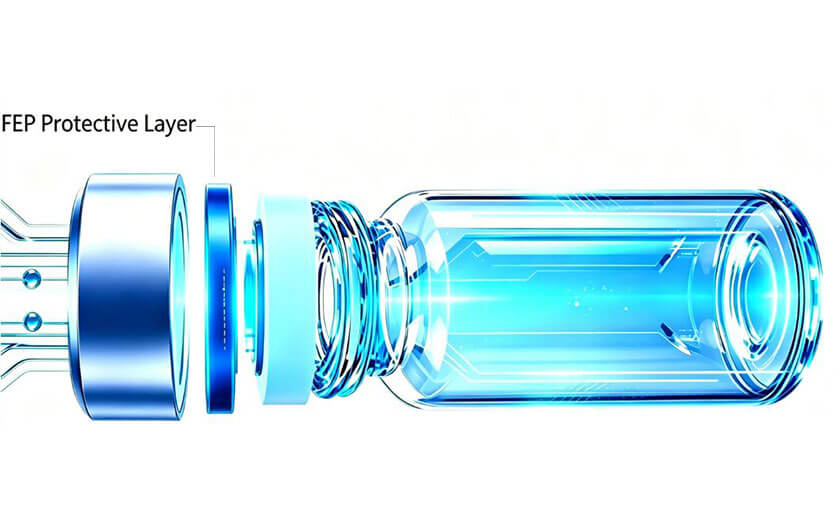
When we pick up a bottle of medication—whether it’s a life-saving biologic, a precision antibiotic, or a specialized therapeutic—our focus is almost always on the drug itself. We trust that it will work as intended, that its potency remains intact, and that it is free from contamination. What most of us never notice, however, is the thin, transparent layer tucked inside the bottle, working silently to protect the medicine we rely on. That layer is FEP film, a high-performance fluoropolymer that acts as an invisible barrier, ensuring the safety, stability, and efficacy of some of the most sensitive pharmaceutical products on the market. Its application scenarios have long covered multiple core links such as pharmaceutical bottle linings and vial sealing, yet it always remains quietly hidden deep inside the packaging.
FEP, or Fluorinated Ethylene Propylene, is a member of the fluoropolymer family, and its exceptional properties make it particularly suitable for the rigorous requirements of the medical and pharmaceutical industries. As a breakthrough solution to the processing challenges of Polytetrafluoroethylene (PTFE), FEP basically retains the excellent chemical stability of PTFE while achieving melt-processable characteristics, which also allows it to flexibly adapt to the needs of pharmaceutical packaging of different specifications. Unlike more visible packaging components, FEP film is designed to be very low-key—usually lined inside pharmaceutical bottles, vials, or blister packs—so it never draws attention. Its value lies not in being seen, but in what it accomplishes: protecting the integrity of the drugs around it even under the harshest conditions, which is particularly prominent in extreme scenarios such as low-temperature storage and high-temperature sterilization.
At the core of FEP film’s effectiveness is its unparalleled chemical inertness. This stems from its unique molecular structure: the carbon-fluorine bond energy is extremely high, and the electron cloud formed by fluorine atoms forms a three-dimensional shield around the main carbon chain, enabling it to withstand almost all chemical reagents except extreme media such as molten alkali metals and fluorine gas. This means it hardly reacts with any substance it comes into contact with—including the most potent drugs, corrosive excipients, or irritating sterilizing agents. Unlike many other materials, FEP film does not leach chemicals into the medication, nor does it degrade or damage when in contact with acids, bases, or organic solvents. Its extremely high purity also ensures that no additional contaminants are introduced, which is in sharp contrast to the possible extract residue problems of some similar materials. This is crucial for pharmaceutical applications, because even the smallest chemical interaction can alter a drug’s composition, reduce its potency, or introduce harmful contaminants. For sensitive biologics or targeted therapies that are usually fragile and prone to degradation, this inertness is indispensable—it ensures that the drug remains pure and effective from the moment it is manufactured until it reaches the patient.
Another key feature that makes FEP film indispensable in pharmaceutical packaging is its ultra-low adsorption rate. FEP has extremely low surface energy, which endows it with excellent non-stickiness, hydrophobicity and oleophobicity, and also makes its surface extremely smooth, which can minimize drug adsorption. Many drugs, especially small-molecule therapeutics and biologics, have a tendency to adhere to the surface of packaging materials. This adsorption can reduce the actual dose of the drug that reaches the patient and affect the therapeutic effect. The smooth, non-stick surface of FEP film minimizes this adsorption, ensuring that nearly 100% of the drug is delivered as intended. This is particularly important for high-cost, high-potency drugs, because even a small loss due to adsorption can have significant clinical and economic impacts. Unlike some alternative materials that may leave traces of drugs, FEP film does not leave any residues, ensuring that the formulation of each batch of drugs is accurate. This feature also makes it occupy an irreplaceable position in high-purity drug packaging.
Low permeability is another key feature of FEP film that safeguards drug stability. Medications are often sensitive to environmental factors such as moisture, oxygen, and gases, which can cause oxidation, hydrolysis, or microbial growth over time. As a robust barrier, FEP film has extremely low permeability to liquids, gases, and organic vapors, which can effectively prevent these substances from seeping into the bottle and reacting with the drug—this is also one of its core advantages distinguishing it from ordinary packaging materials. Its low permeability to liquids, gases, and organic vapors ensures that the drug’s environment remains controlled, extending its shelf life and maintaining its efficacy. This is particularly valuable for drugs that require long-term storage or transportation across different climates, otherwise fluctuations in temperature and humidity may affect their quality. Even under extreme temperature conditions—from low-temperature storage to high-temperature sterilization—FEP film can maintain its barrier properties, because it can withstand a continuous service temperature range of -240°C to 205°C. This excellent thermal stability also allows it to adapt to various sterilization process requirements in the pharmaceutical industry.
What makes FEP film truly an “all-round barrier” is its ability to combine these properties with practicality. It is transparent with a light transmittance of over 99%, allowing manufacturers and pharmacists to visually inspect the drug without opening the packaging. It is also thermoformable, heat-sealable, and easy to laminate, and can be processed by conventional thermoplastic processes such as extrusion and film blowing, making it suitable for various packaging designs—from vials for injectables to large bottles for oral medications, and even for special pharmaceutical containers such as sampling bags and fluid bags. In addition, FEP film complies with global pharmaceutical standards, including the U.S. Food and Drug Administration (FDA) regulations on food and drug contact, ensuring that it meets the strict safety requirements of the industry. It contains no plasticizers or additives, further reducing the risk of contamination and ensuring compatibility with even the most sensitive drugs, which is also an important prerequisite for its wide application in the biopharmaceutical field.
In an industry where safety and compliance are paramount, FEP film plays a foundational yet underappreciated role. It is not a fancy technology, nor is it a component that consumers will take the initiative to ask about. But without it, many of the advanced drugs we rely on—from cancer treatments to rare disease therapies—may be less effective, less safe, or unable to reach patients in their intended form. Compared with some similar fluoropolymer materials, FEP achieves a better balance between processing convenience and performance stability. It not only has excellent protective capabilities, but also can adapt to large-scale production needs, which makes its position in the high-end pharmaceutical packaging field difficult to be replaced. It is a silent guardian, working behind the scenes to ensure that every dose of medication is as pure, effective, and safe as it was designed to be.
As the pharmaceutical industry continues to evolve, with new biologics, gene therapies, and precision medicines emerging, the demand for reliable, high-performance packaging materials will only grow. With its unique combination of chemical inertness, low adsorption, and low permeability, as well as excellent processing performance and compliance, FEP film is fully capable of continuing to be an important component in protecting these life-saving drugs. As shown in relevant industry studies, FEP film performs significantly better than non-fluoropolymer materials in high-purity drug packaging, which can effectively reduce the risk of drug contamination and degradation, and ensure the clinical effect of drugs. This proves the power of materials science—even the thinnest and most unassuming layer of film can have a profound impact on human health.
Next time you open a bottle of medication, take a moment to think about the invisible film inside. It may be invisible, but it is never overlooked—it works tirelessly, relying on its own excellent material properties to guard the purity and efficacy of the drug, ensuring that the drug you need is safe, effective, and ready to work at any time. This is the quiet power of FEP film: the unsung hero in the field of pharmaceutical packaging, and an indispensable invisible guardian in the high-end pharmaceutical industry.