Introduction
In the world of high-performance polymers, Polytetrafluoroethylene (PTFE) and expanded Polytetrafluoroethylene (ePTFE) are two remarkable materials with significant importance across various industries. While they share a common chemical foundation, their structural differences lead to distinct properties and applications. This article provides an objective comparison between these two advanced fluoropolymer materials based on available technical information.
Fundamental Chemical Composition
Both PTFE and ePTFE are essentially the same material at the molecular level—they’re both forms of polytetrafluoroethylene. This means they share identical chemical resistance properties, standing up to strong acids, bases, and other corrosive chemicals. They also maintain stability across extremely wide temperature ranges.
The key difference lies not in their chemistry but in their physical structure. While PTFE is a solid, non-porous material, ePTFE is created by mechanically stretching PTFE to form a microporous structure. This expansion process creates a network of interconnected pores that fundamentally change the material’s properties while maintaining PTFE’s inherent chemical resistance.
Structural Differences and Physical Properties
Table 1: Key Physical Properties Comparison
| Property | PTFE | ePTFE |
| Structure | Solid, non-porous | Microporous, fibrous |
| Density | Higher (approx. 2.2 g/cm³) | Lower (0.30-1.3 g/cm³) |
| Flexibility | Stiff | Highly flexible |
| Elasticity | Limited | Excellent recovery |
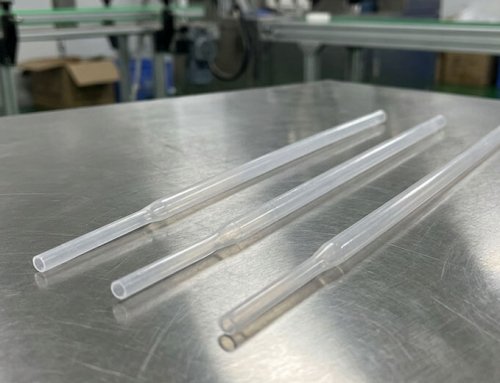
| Typical Form | Solid sheets, blocks | Membranes, sheets, tubes |
The microporous structure of ePTFE consists of nodes connected by fibrils. The distance between nodes (intermodal distance) determines the material’s porosity—greater distances create higher porosity, while smaller distances reduce it. This controllable porosity enables ePTFE to be engineered for specific applications.
Functional Performance Characteristics
Water Resistance and Breathability
One of ePTFE’s most valued properties is its unique combination of water resistance and water vapor permeability. The microporous structure features pores small enough to block liquid water molecules (providing hydrostatic resistance up to 10,000mm H₂O) yet large enough to allow water vapor molecules to pass through (with moisture vapor transmission rates exceeding 10,000 g/m²/24 hours).
This makes ePTFE particularly valuable for protective fabrics in outdoor apparel and medical applications where both waterproofing and breathability are required. PTFE, being non-porous, doesn’t offer this breathability characteristic.
Temperature Resistance
Both materials exhibit exceptional temperature resistance, remaining functional across a range of approximately -150°C to 300°C. This stability makes them suitable for extreme environment applications, from cryogenic settings to high-temperature industrial processes.
Mechanical Properties
ePTFE demonstrates superior flexibility and recovery compared to standard PTFE. The expanded structure gives ePTFE a lower coefficient of friction, enhancing its lubricity and durability in applications requiring repeated flexing or movement.
Manufacturing Processes
The manufacturing difference is fundamental to distinguishing these two materials:
- PTFE production involves polymerization of tetrafluoroethylene followed by processing through compression molding or extrusion to create solid forms.
- ePTFE production begins with PTFE that undergoes a specialized expansion process involving mechanical stretching. This stretching action creates the characteristic microporous structure with its node-and-fibril architecture.
This expansion process allows manufacturers to control key parameters including porosity, density, and pore size by adjusting the stretching conditions.
Applications and Use Cases
- PTFE Applications:
- Non-stick coatings for cookware
- Chemical-resistant linings and components
- Electrical insulation
- Low-friction bearings and seals
ePTFE Applications:
- Medical devices: Surgical sutures, vascular grafts, implantable membranes
- Protective apparel: Waterproof, breathable fabrics for outdoor wear and medical garments
- Filtration systems: Membranes for various separation processes
- Industrial components: Specialized gaskets, seals, and vents
- Automotive and aerospace: Wire harnesses, cable assemblies, and ventilation systems
The medical applications particularly benefit from ePTFE’s combination of biocompatibility, flexibility, and controlled porosity. Studies have examined ePTFE’s performance in specific applications such as vascular prostheses, investigating the relationship between wall structure and physical properties.
Performance Under Extreme Conditions
A notable difference emerges in low-temperature performance when comparing ePTFE composites to other membrane materials like TPU. While ePTFE maintains its moisture vapor transmission capability across its entire temperature range, TPU experiences significantly reduced permeability at lower temperatures, becoming nearly impermeable to moisture vapor below -15°C.
Similarly, ePTFE’s wind resistance stems from its tortuous pore pathway rather than straight channels. Wind encountering the membrane must change direction repeatedly, effectively preventing heat loss through convection while maintaining breathability.
Conclusion
PTFE and ePTFE, while chemically identical, serve different functional roles due to their structural differences. PTFE serves as a robust, chemically inert solid material excellent for applications requiring non-reactivity and durability. ePTFE, with its microporous structure, offers unique capabilities in filtration, moisture management, and biomedical applications where controlled permeability and flexibility are essential.
The selection between these materials ultimately depends on specific application requirements—whether the priority is maximum chemical resistance (favoring PTFE) or a combination of chemical resistance with breathability and flexibility (favoring ePTFE). Understanding these fundamental differences enables engineers and designers to make informed material selections for their specific technical requirements.
If you have any questions or needs regarding our expanded ptfe(Eptfe) solutions, please feel free to contact us. Our contact information is as follows:
Phone: +86 15956561251
Email: ruby@mochi.org.cn
Looking forward to working with you to create a bright future!