In the world of insulation and protection for components, the choice of material often comes down to a balance between performance and practicality. While PTFE (Teflon) is legendary for its supreme chemical resistance and high-temperature stability, its application has one inherent challenge: it doesn’t truly shrink. It’s a sintered polymer, not a thermoplastic. This is where its cousin, FEP (Fluorinated Ethylene Propylene), steps in with a distinctly useful and often overlooked set of properties.
At its core, FEP is a true thermoplastic. This fundamental difference from PTFE is what grants FEP heat-shrink tubing its unique advantage: it softens and flows when heated. This characteristic makes it significantly more thermally responsive than PTFE. The result is a tubing that can actively conform and create a tight, protective seal around complex parts.The Problem It Solves: The Gremlins in the Machine.
What makes FEP heat-shrink particularly interesting for engineers and designers are three key operational benefits:
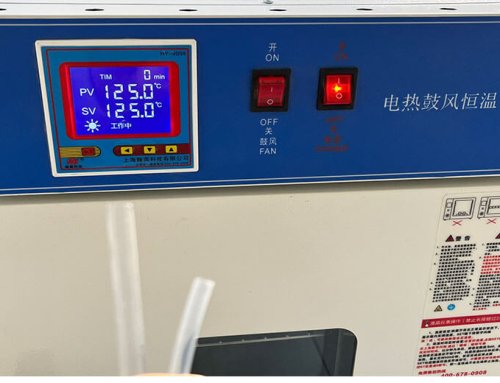
- Lower Activation Temperature: Depending on the wall thickness and the chosen heat source (e.g., a controlled heat gun, oven, or even a carefully managed torch), FEP tubing can begin to shrink at temperatures as low as 130°C (266°F). This lower thermal threshold is crucial for protecting heat-sensitive adjacent components or substrates that might be damaged by the much higher temperatures required for processing PTFE.
- Exceptional Contour Conformity: Because it becomes soft and malleable, FEP doesn’t just shrink in diameter; it flows. It will meticulously conform to irregular shapes, sharp corners, threads, and uneven surfaces. This creates a seamless, nearly monolithic encapsulation that provides excellent environmental sealing against moisture, dust, and many chemicals. The final fit is tight and secure, minimizing voids or air pockets.
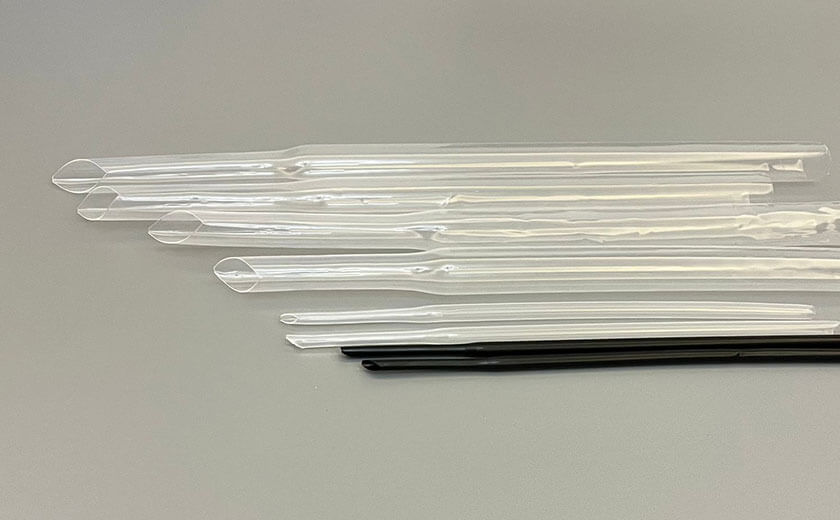
- The Clarity Factor: An additional, practical advantage of FEP is its natural optical clarity. This allows for visual inspection of the underlying component or wire markings after the tubing is applied, a feature not available with opaque PTFE.
Application:
The process is straightforward. Select a diameter that allows the tubing to slide easily over the part. Applying gentle, even heat causes the tubing to contract radially. As it shrinks, the material densifies, strengthening the wall and forming a tight mechanical bond. It is essential to apply heat uniformly to avoid wrinkles or incomplete recovery.
Why This Matters:
FEP heat-shrink is not a replacement for PTFE in extreme chemical or temperature environments—PTFE still reigns there. Instead, FEP fills a specific niche. It is the go-to solution when you need a robust, chemically inert fluoropolymer barrier and you require a tight, conformal seal on a complex geometry, all without exposing the assembly to excessive heat.
It’s the material that solves the puzzle for hermetic connectors, irregularly shaped sensors, medical device components, or aerospace wiring bundles where both inertness and a perfect fit are non-negotiable.
In essence, FEP heat-shrink tubing offers a “best of both worlds” scenario for many design challenges: the renowned chemical resistance of fluoropolymers, now with the practical, user-friendly installability of a true heat-shrink. It’s a quiet engineering advantage, turning a complex insulation problem into a simple, reliable, and clean solution.