In the engineering world of thermal management, the conversation often centers on cold plates, pumps, and radiators. However, the components that tie these elements together—the fluid conveyance lines—are where system reliability is truly won or lost. As liquid cooling moves from niche high-performance applications to mainstream necessity for data centers, power electronics, and advanced manufacturing, the limitations of standard tubing become apparent. This is precisely where FEP Corrugated Tubes have established their essential role, not through marketing claims, but through a set of measurable, performance-critical properties.
From Material Science to Field Performance
FEP (Fluorinated Ethylene Propylene) is a fully fluorinated polymer, a fact that dictates its behavior. In practical terms, this chemistry translates into a tubing material that is inherently incompatible with most other substances. This incompatibility is its greatest strength in a cooling system. It means the tube wall will not interact with or leach into the coolant, preserving fluid chemistry and preventing the gradual loss of anti-corrosion or biocidal additives that can plague systems using less inert materials.
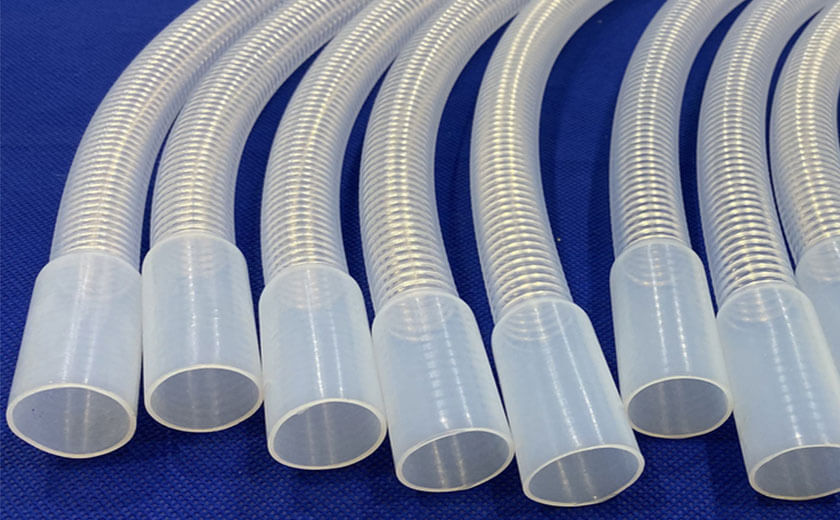
The corrugated design addresses a fundamental mechanical challenge: thermal expansion and vibration. In rigid piping, thermal cycling creates stress at connection points. The consistent flex of a corrugated tube absorbs this movement, eliminating a primary cause of fitting fatigue and leaks. This is crucial in systems where temperature differentials of 50°C or more are common during startup, shutdown, or load shifts.
Key Properties with Direct Operational Impact
- Broad Temperature Capability: Engineers specify FEP tubes for a continuous service range typically from -100°C to +200°C. This single component can handle both the chilled supply line and the warmer return line in a complex loop, simplifying inventory and design.
- Chemical Integrity as a System Safeguard: The tubing’s resistance to nearly all coolants—be it deionized water, glycol mixtures, or dielectric fluids—acts as a containment barrier. It prevents tube degradation that could introduce particulates into sensitive components like microchannel cold plates, where clogging would be catastrophic.
- Visual Flow Verification: The high clarity of FEP is a low-tech solution to a high-stakes problem. Technicians can instantly verify prime, spot air pockets that impede cooling, or identify discoloration that signals coolant breakdown or contamination—all without invasive sensors or system shutdown.
- Long-Term Stability: Unlike some elastomers or lesser plastics, FEP does not rely on plasticizers that can migrate out over time. Its resistance to ozone and UV means its physical properties—flexibility, burst pressure—remain stable for years, even in challenging environments like rooftop heat exchanger lines.
Application-Specific Value Proposition
In a data center utilizing rear-door heat exchangers, FEP corrugated tubes offer leak-free reliability over thousands of thermal cycles, directly impacting uptime. For a semiconductor test handler where temperature ramping is rapid, the tubes accommodate constant movement without work-hardening. In an industrial laser system, their purity ensures no contaminants foul the optical cooling circuit.
A Decision for System Foundations
Selecting FEP Corrugated Tubes is seldom about finding the lowest-cost option. It is a specification for risk mitigation and long-term operational stability. It is chosen because its material properties provide a known, predictable performance envelope that allows the rest of the cooling system—the pumps, the controls, the heat exchangers—to function as designed. As thermal loads continue their upward trajectory, the infrastructure supporting heat removal must be fundamentally robust. FEP corrugated tubing provides that foundation of reliability, making it a standard choice for engineers who design systems meant to last.